News
2026.09.02~09.27 Field Survey in Kazakhstan
Сәлем (Hello)!!
From September 2 to 27—a total of 25 days—Hiroaki Sato, a first-year master’s student, traveled to Kazakhstan for field research. Although the destination was the same as Mr. Beppu’s trip last year, the purpose and content of this research were completely different.
During his approximately one-month stay, he conducted surveys of rare-metal deposits in East Kazakhstan, visited universities, and attended lectures.
The main focus of the survey was a journey to explore lithium deposits hidden deep in the mountains of East Kazakhstan. We drove a Land Cruiser along unpaved roads, climbed mountains, and searched for rocks—sometimes while fearing the presence of bears. Thanks to these efforts, I was able to bring back plenty of mineral samples that are essential for my research!
However, in this blog post, I’ll keep the research talk to a minimum and instead introduce some of the “differences from Japan” I encountered in Kazakhstan. To start with: rocks, scales, and alcohol!
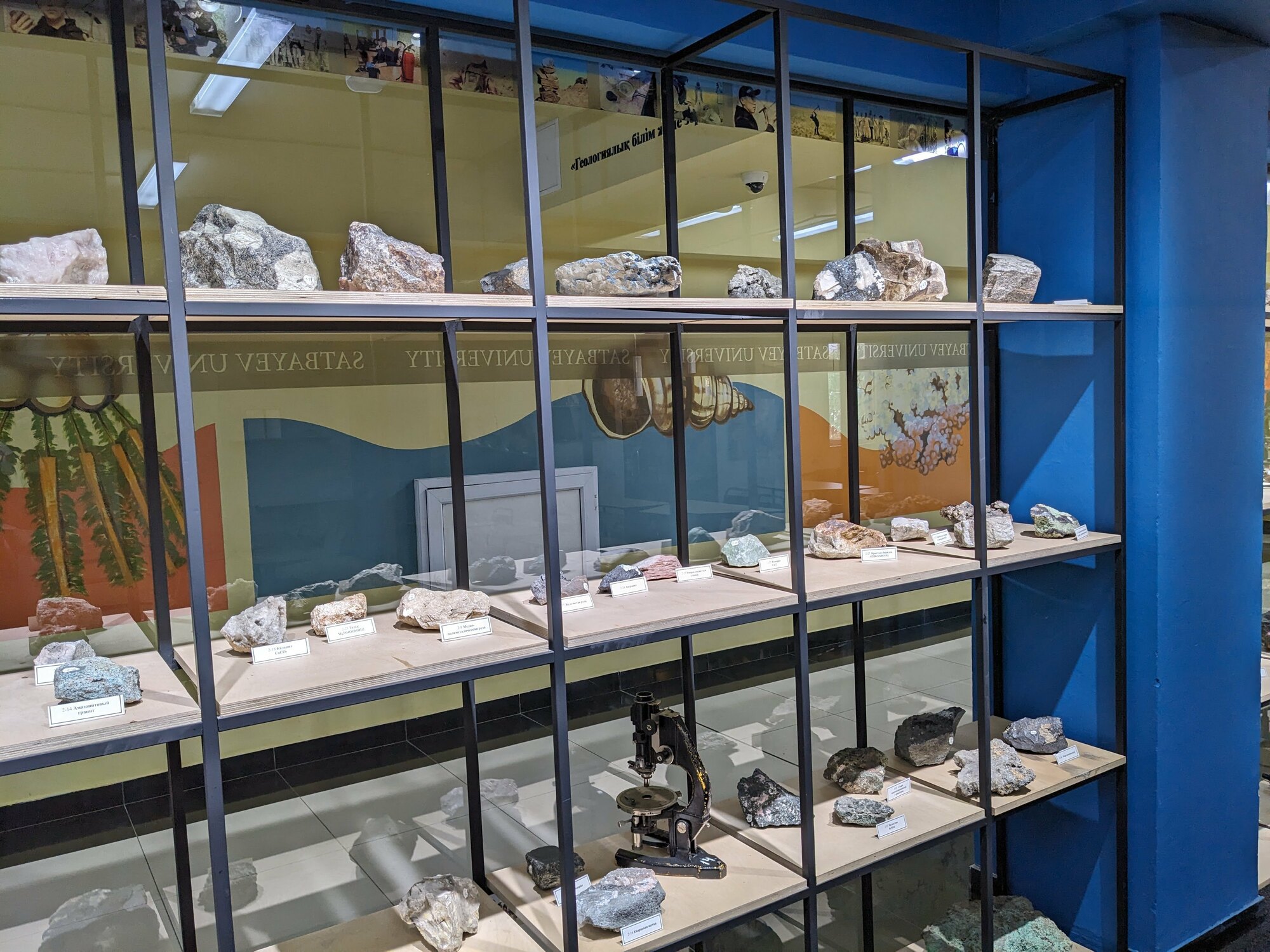
First up: rocks. As you’d expect from a resource-rich nation, rocks are simply everywhere here. At Satoev University, which I visited, rock specimens were lined up in rows in the hallways and classrooms—no matter where I walked, I’d come face-to-face with rocks. It’s heaven for a rock lover.
(A hallway at Satorbaev University. Look right or left—it’s rocks, rocks, and more rocks. Each one is labeled with its origin and name, so just walking down the hall is like a lesson in mineralogy.)
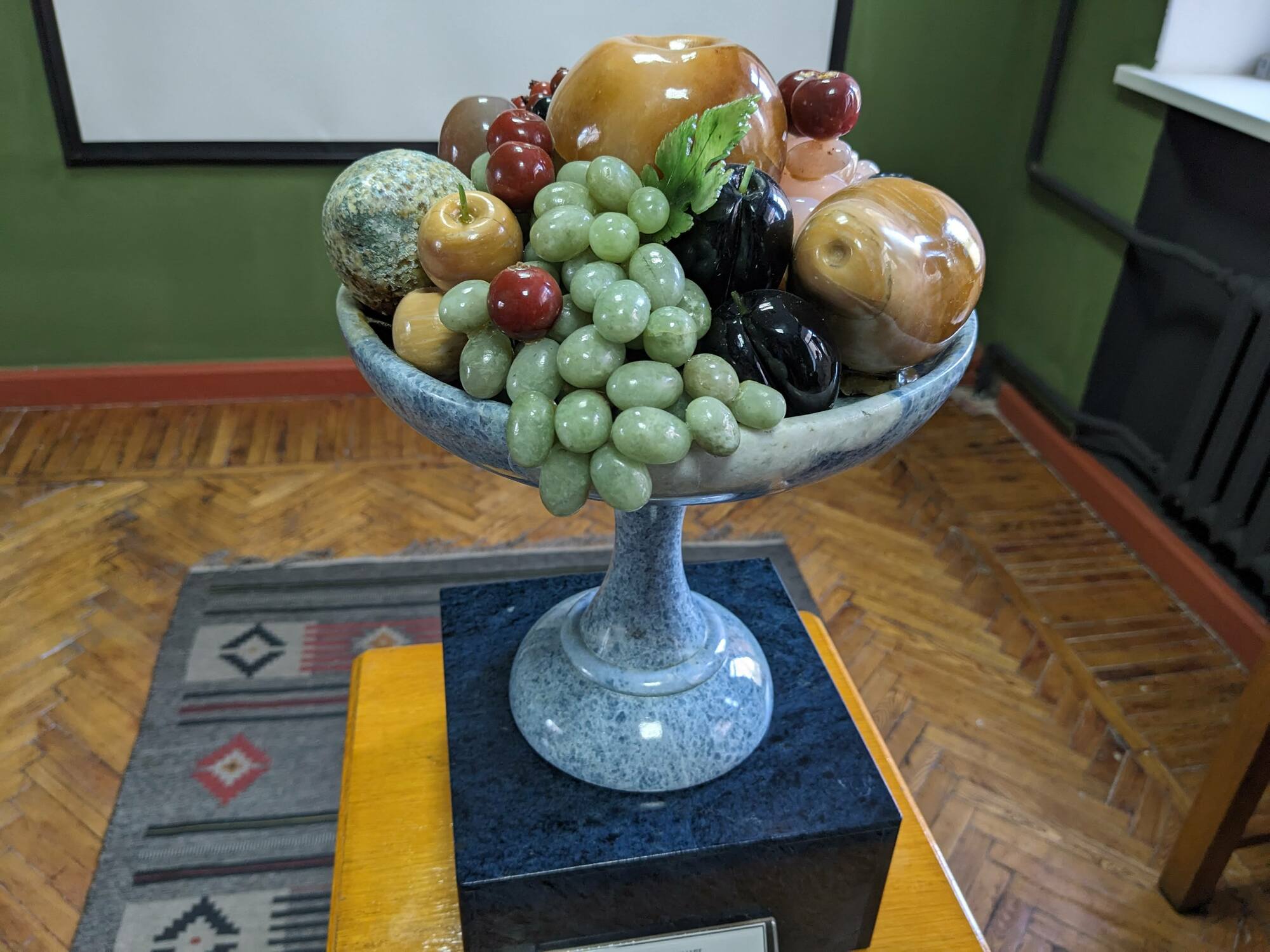
At a museum in Almaty, I even came across a fruit platter made entirely of rocks. The grapes and apples—they’re all real rocks. The only downside is that even though they look incredibly delicious, you can’t actually eat them.
(A fruit platter made of stones. Since I was treated to mountains of real fruit every day, I just enjoyed this one with my sight.)
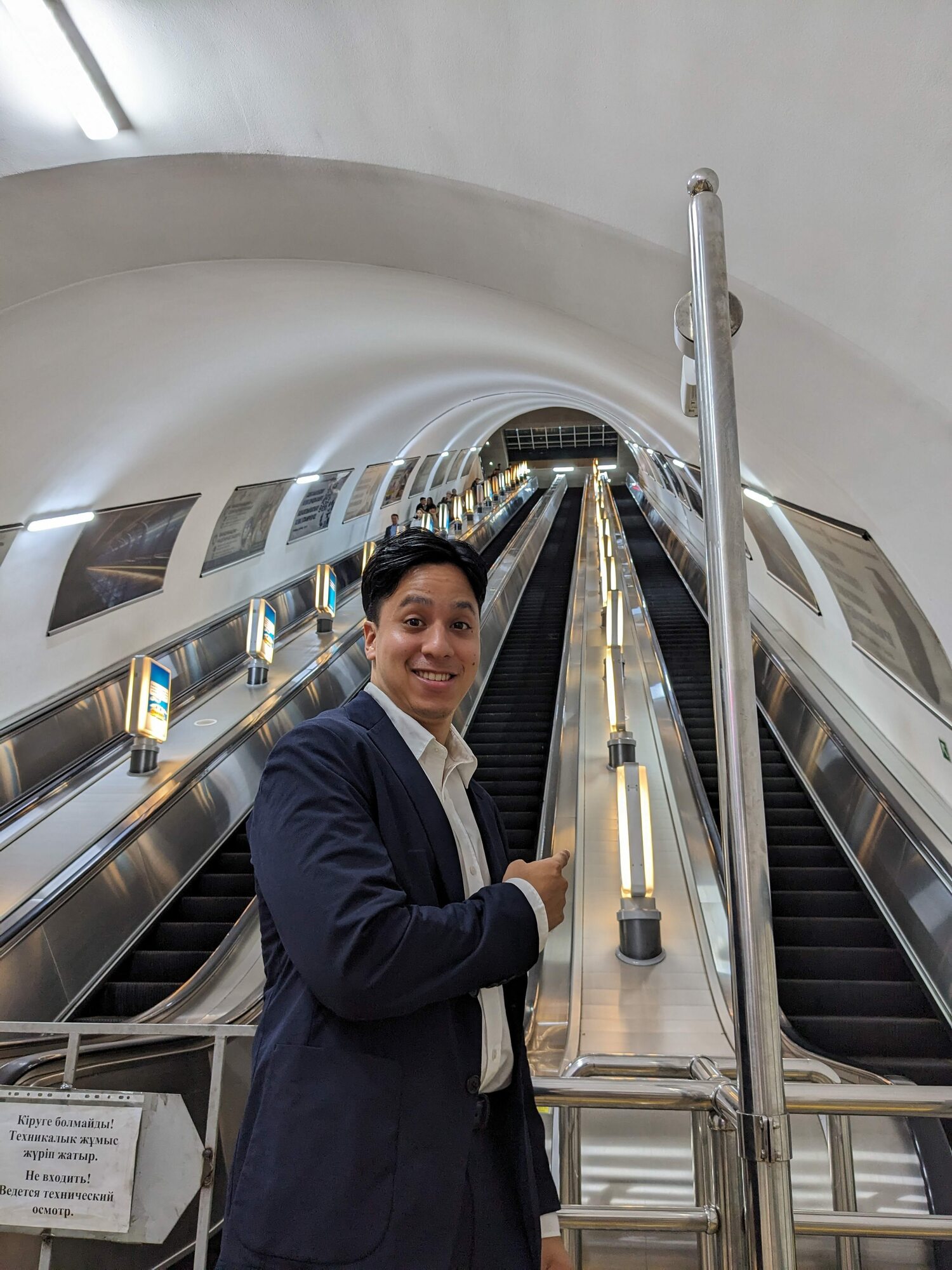
Next, let’s talk about scale. Kazakhstan’s land area is about seven times that of Japan, so everything is huge. The first thing that surprised me was the escalator in the Almaty subway. It was just incredibly long. No matter how long I rode it, it never seemed to end. Even when I looked down, I still couldn’t see the end.
(An escalator with no end in sight. By the time I got off, I might have felt like a slightly different person than when I first got on.)
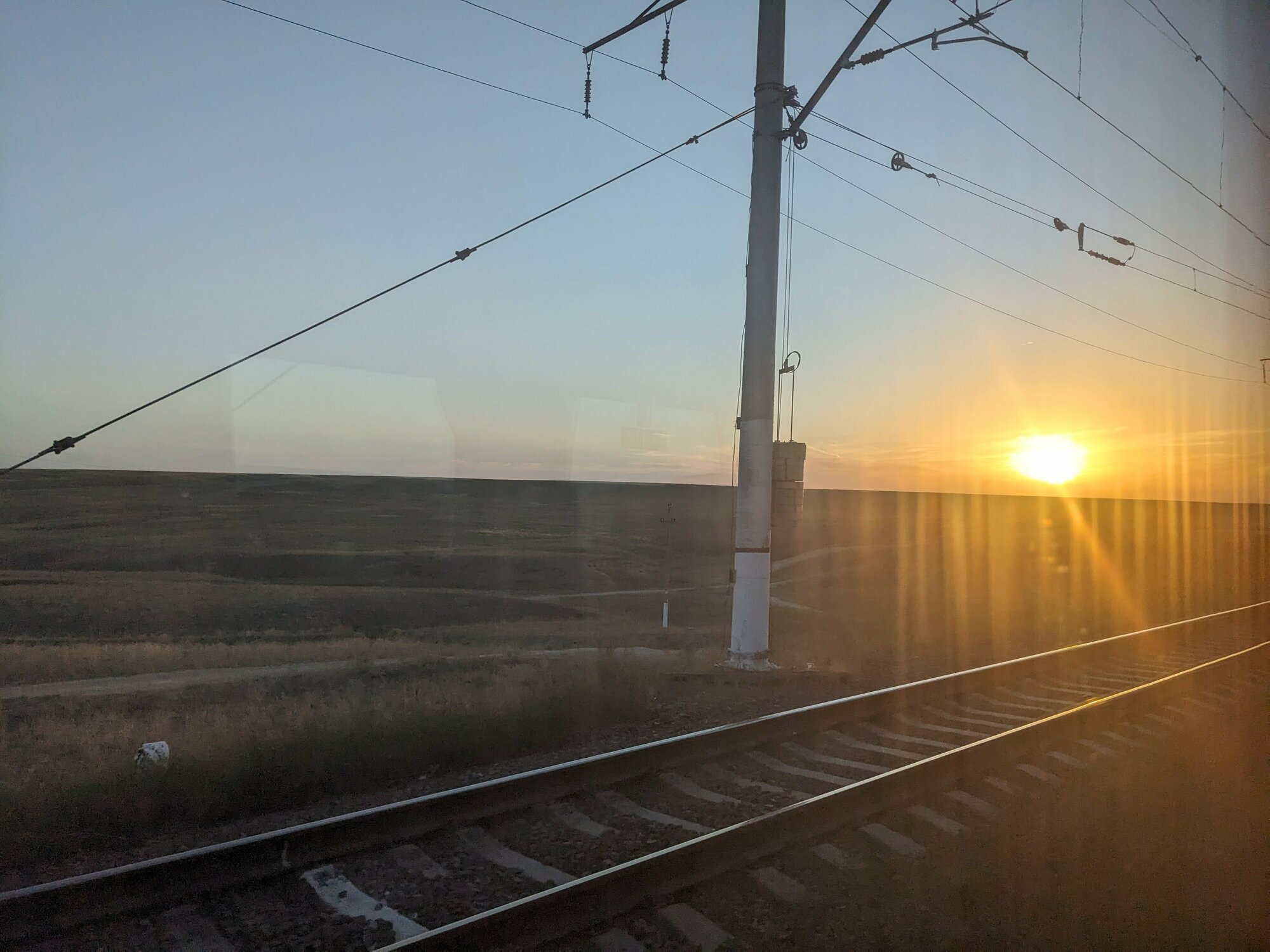
I traveled from Almaty to the capital, Astana, on an overnight train. From the train window, I could see grasslands stretching endlessly into the distance, with the setting sun sinking beyond them. I never knew the horizon could be so perfectly straight.
(The sunset seen from the train. I’d almost want to take this ride again just to see this view.)
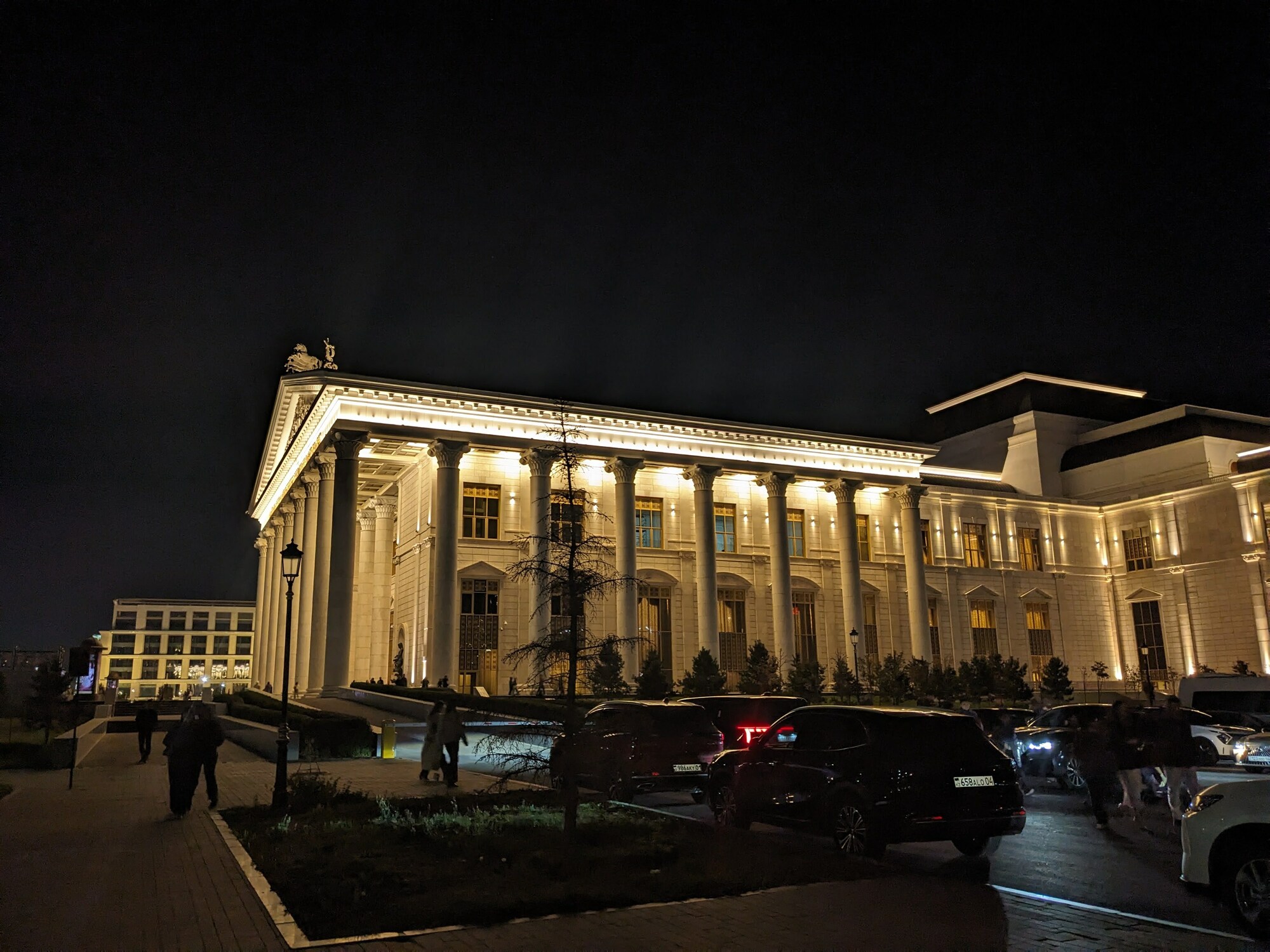
When I arrived in Astana, I found an opera house as grand as a palace. Since this building appeared right after the train had raced through the grasslands all night, my mind couldn’t quite wrap itself around the contrast.
(The Astana Opera House. Its sheer size can’t be fully captured in a photo.)
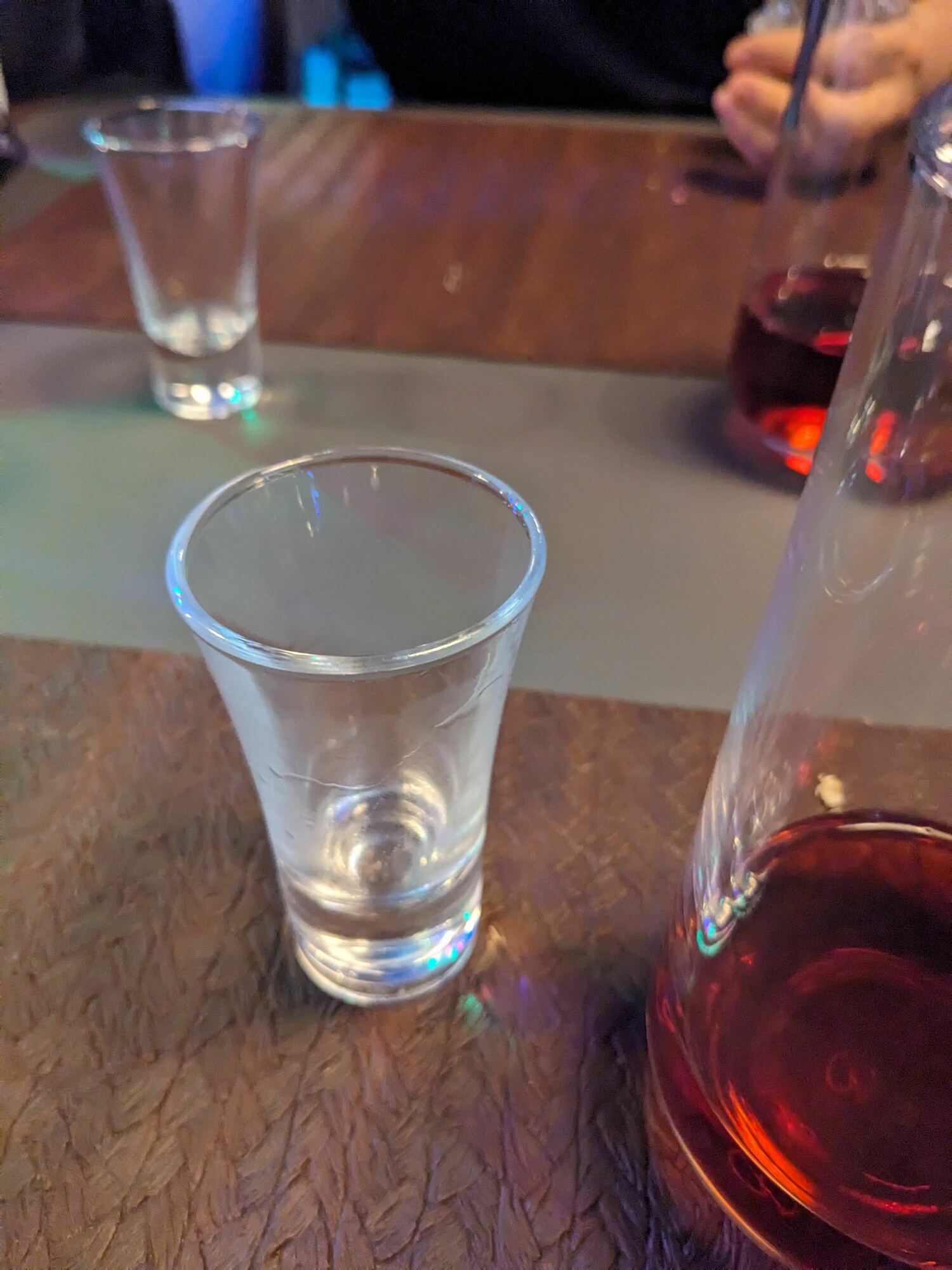
Finally, drinks. One night, we had a great time drinking vodka with Nursurtan’s friends. I’d braced myself, expecting people from the Russian cultural sphere to be heavy drinkers, but surprisingly, some reached their limit quite early on. It seems the notion that “Kazakhs can hold their liquor” was just a misconception after all.
(Toasting with vodka. Even if we can’t speak the same language, clinking glasses makes us friends.)
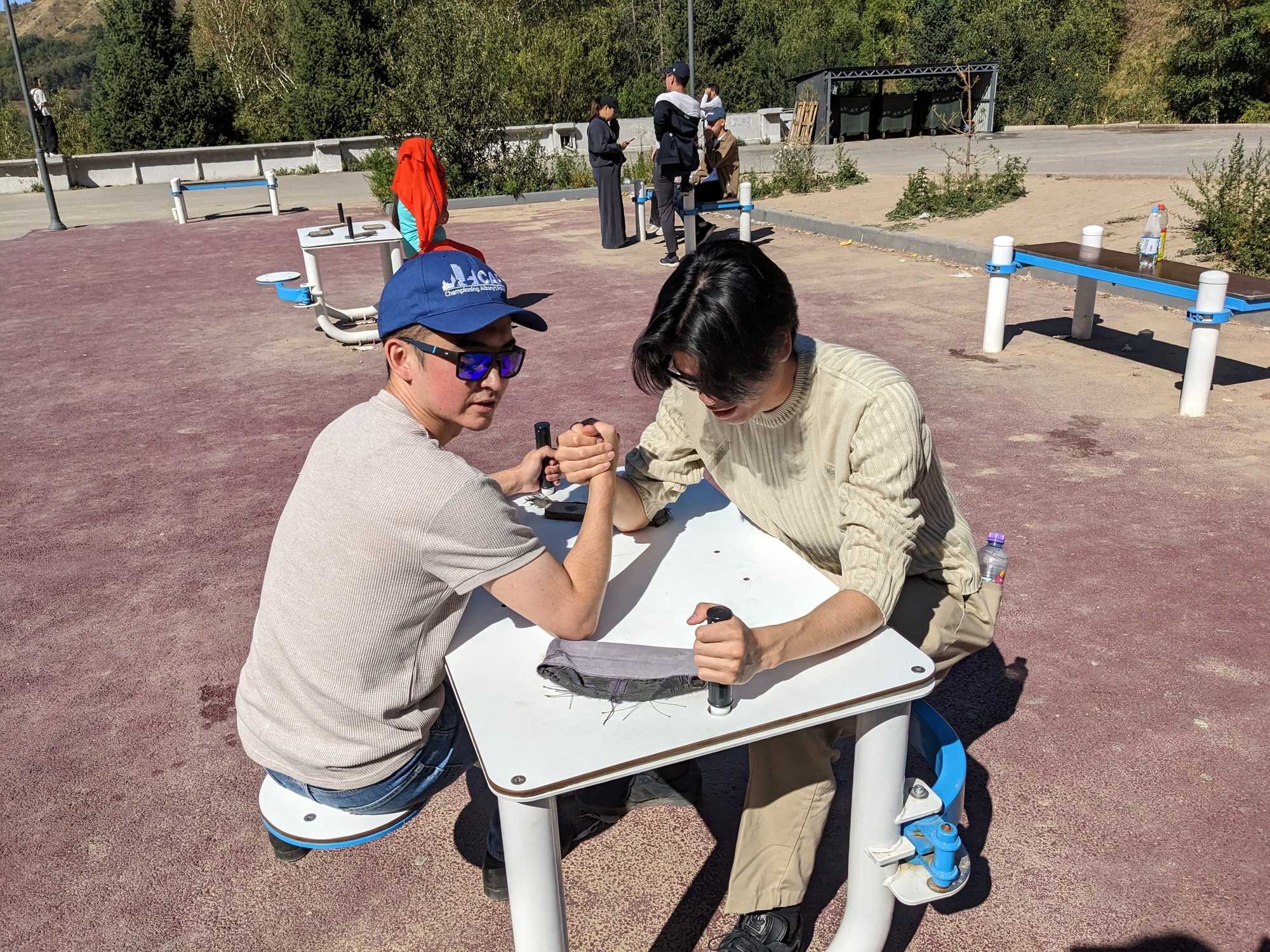
After the drinks came a test of strength. In the park, Nursurtan and Yokomachi started an arm-wrestling match. It was a serious contest with national pride at stake, and the college students watching got really excited.
(Nursurtan vs. Yokomachi. I’ll leave the result to your imagination.)
Through this field study, I was able to fully experience the warmth of the Kazakh people and the grandeur of this country’s nature and culture. Both in terms of research and daily life, I had the opportunity to gain valuable experiences that are hard to come by on a typical trip. Thank you so much.
I’m so glad I joined the Environmental Geology Lab!


