News
October 31, 2026 – November 1, 2026: Field Trip Organized by the Young Researchers’ Group of the Society of Resource Geology @ Akagane Mine
Hello! I’m Kitano, a fourth-year undergraduate student!
With midterm presentations fast approaching, I took advantage of this valuable opportunity to participate in the field trip organized by the Young Researchers’ Group of the Geological Society of Japan: “Geology and Mineralization of the Akagane Mine in Iwate Prefecture”!
The Akagane Mine was an iron-copper mine located in Oshu City, Iwate Prefecture (formerly Esashi City), and is believed to have formed through skarn-associated mineralization.
Skarn-associated mineralization is a type of mineralization that is not yet fully understood; apparently, even experts cannot clearly define what a skarn deposit is.
A tentative definition describes it as “mineralization accompanied by characteristic minerals resulting from magma intrusion (penetrating through strata) into a system associated with carbonate rocks.” Until now, it was thought that magma intruded into carbonate rocks, but in reality, carbonate rocks are often not found; at the Akagane Mine, for example, magma intruded into basalt, leading to a reevaluation of the definition.
Given the nature of this mineralization, we decided to start by thoroughly studying the subject. On the first day (October 31), we held a seminar at the Oshu City Cultural Hall Z Hall.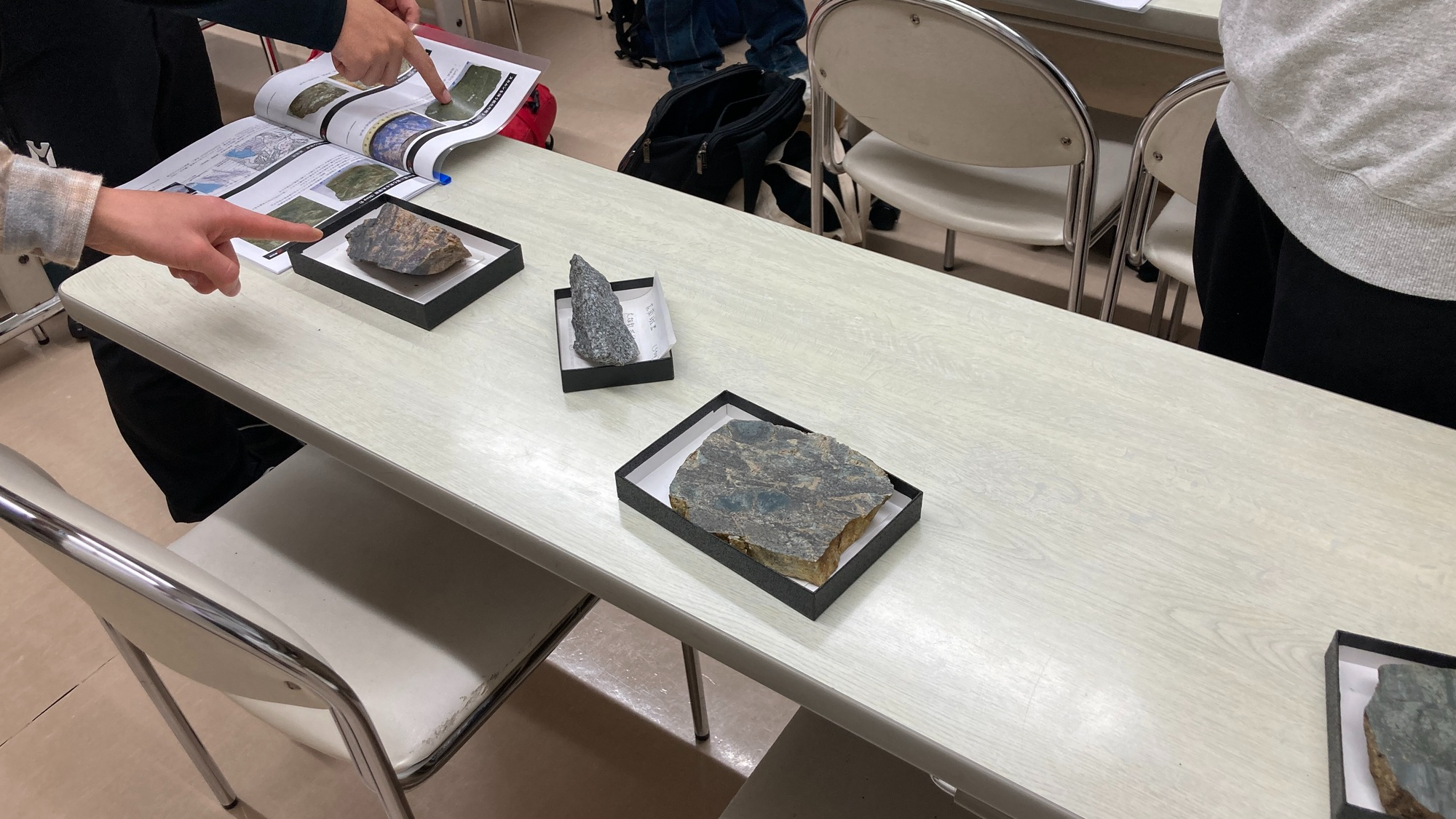
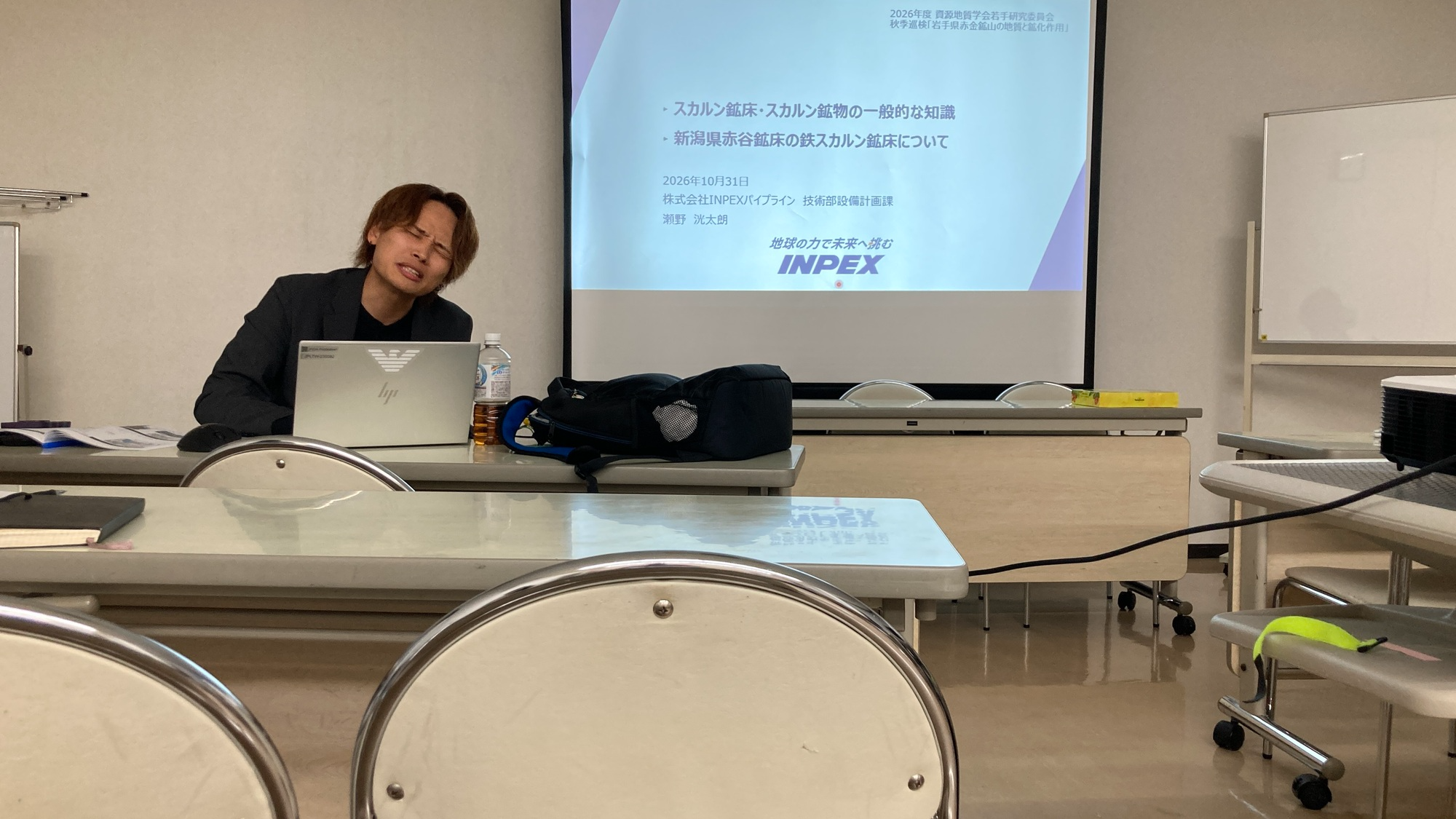
First, Mr. Satori from AIST gave a presentation on the Akagane Mine and the skarn-associated mineralization in the surrounding area. Next, Mr. Seno from INPEX explained general principles regarding skarn deposits and discussed his doctoral dissertation (on the Akaya Skarn Deposit in Niigata). The samples mentioned in Mr. Satori’s presentation were brought to the venue, and the participants examined them closely.
After the meeting, we held a social gathering near Mizusawa Station, where we chatted about all sorts of things that only young researchers can talk about…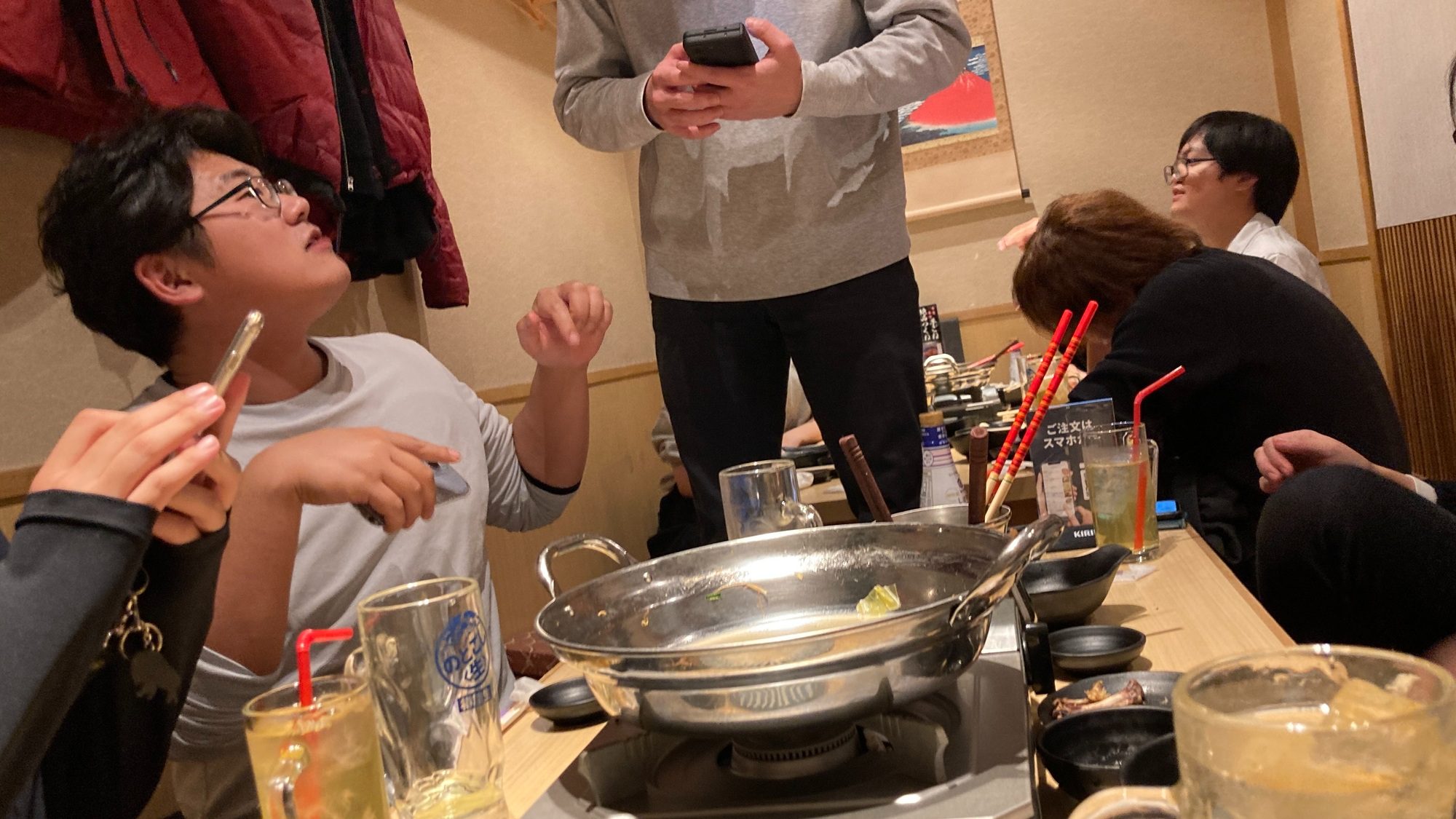
I also received advice on pursuing a Ph.D. (though I got pretty torn apart in the process…).
I enjoyed this social gathering so much that I ended up going to a second round of drinks, which left me with a hangover the next day. I’ll make sure not to do that again.
Day 2 (November 1) was the main field trip.
First, we split up into rental cars and headed out to observe the surrounding rock formation, the Hitoshira Granite (or granodiorite?).
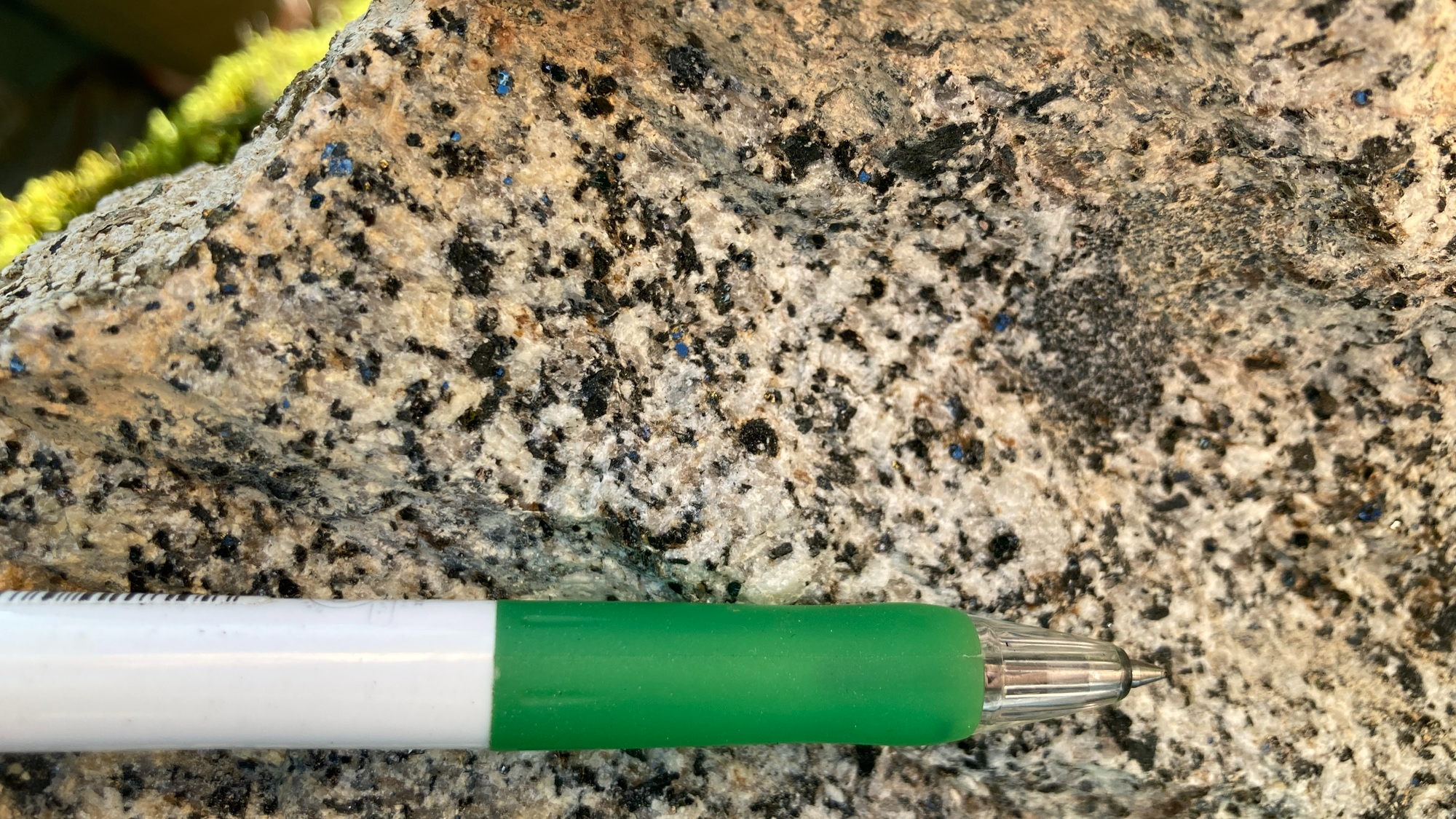
It looks like ordinary granite, but basaltic textures are visible in some areas, suggesting that an intrusion has occurred.
Next, guided by representatives from the Mikami Quarry—which manages the site—we entered the grounds of the Akagane Mine and observed the Ohata-no Granodiorite, which is closer to the mineralization zone. Once inside this area, we observed quartz veins, hydrothermal biotite, and sulfides, making it clear that we were gradually approaching the center of the mineralization.
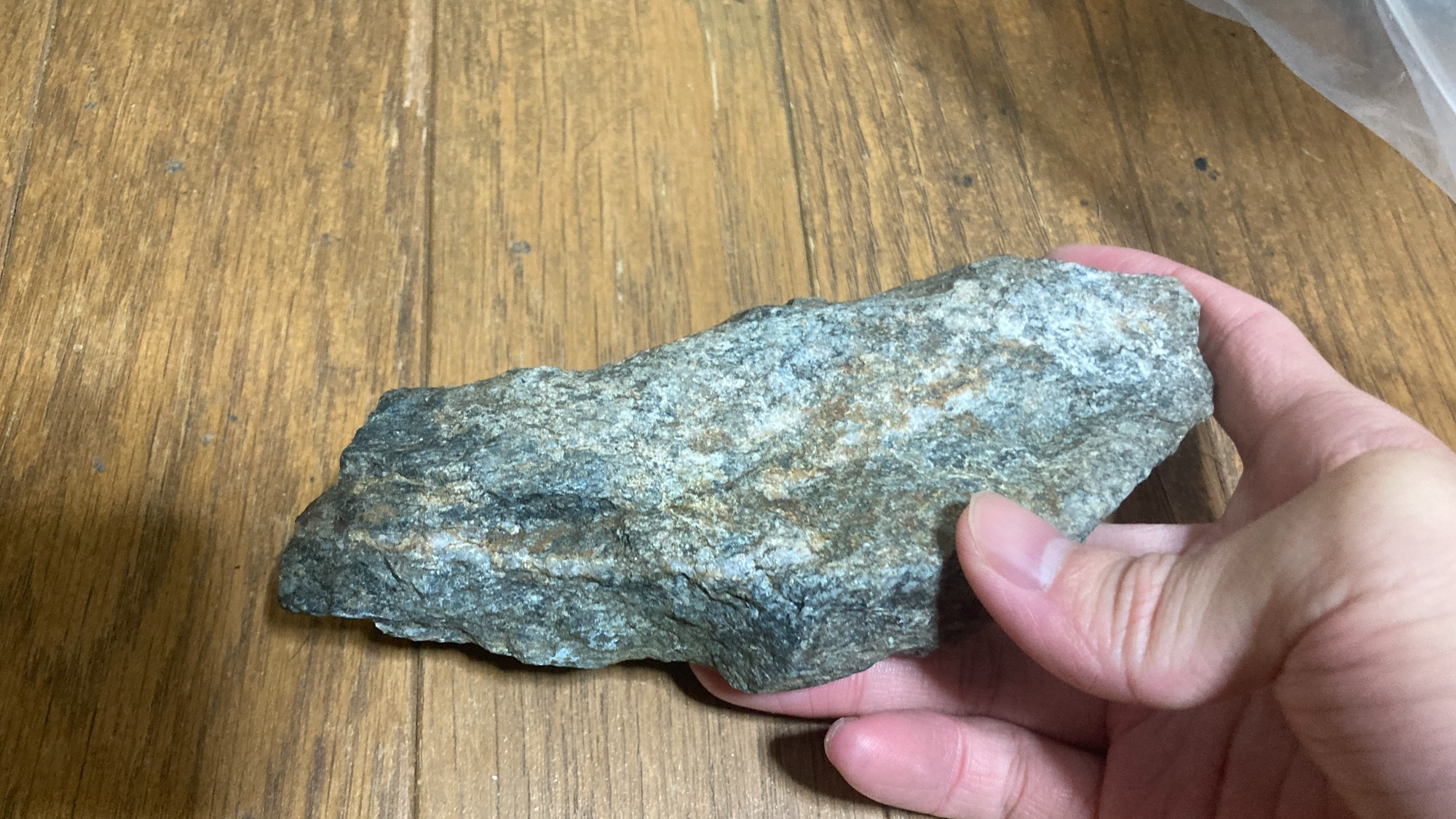
By the way, the photo above shows the samples I brought home. Each participant took home a generous amount of their favorite rocks. I brought back about 10 kg myself. My shoulders are sore.
And also, we examined the Akagane ore body and observed the areas where mineralization was occurring.
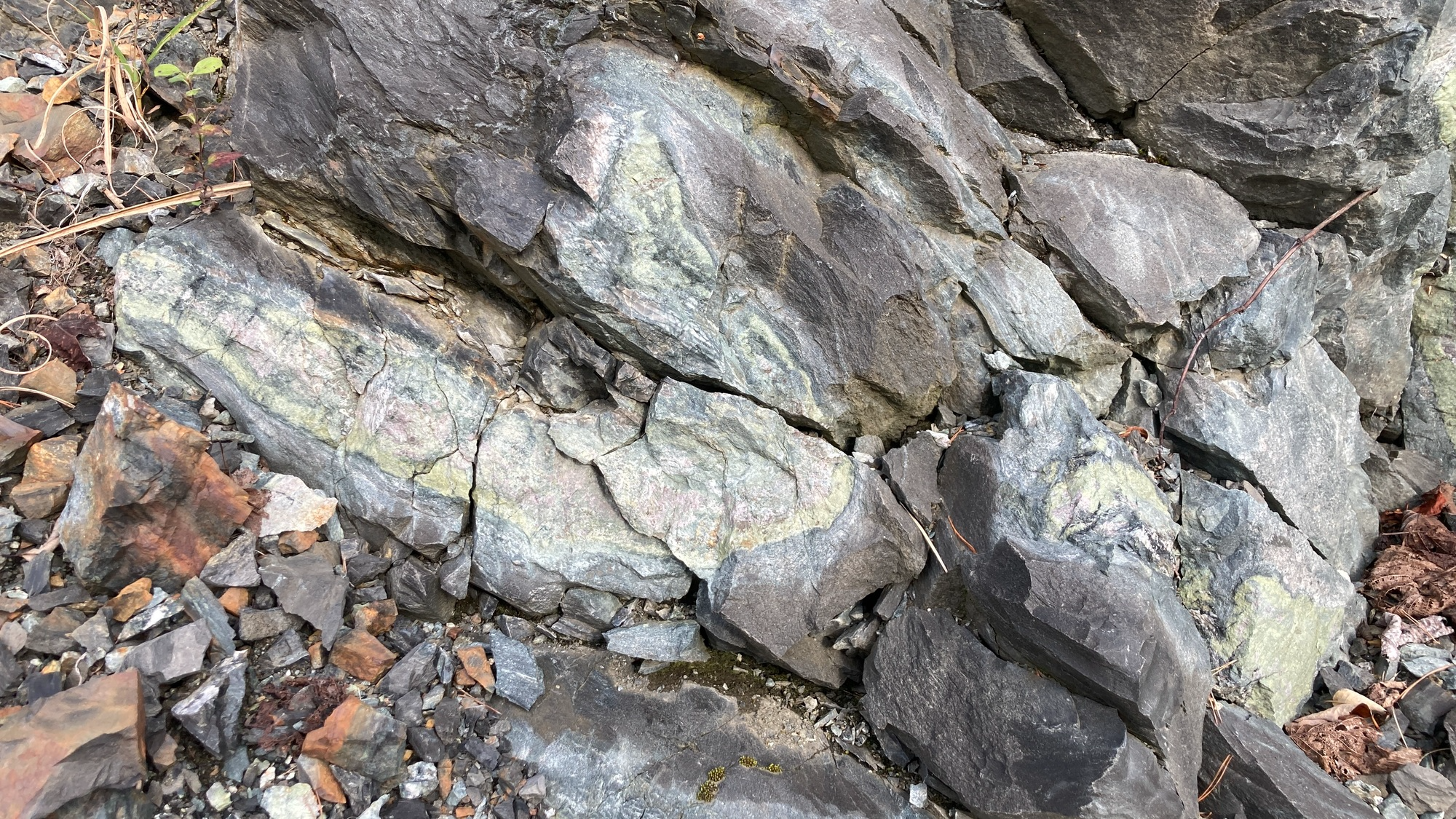
Centered on the areas where hydrothermal fluids originating from granitic magma flowed through the basalt, we could see a zoned structure consisting of sulfides > tourmaline > axite > epidote > amphibole. Tourmaline and axite apparently contain boron, which indicates that the magma was also rich in boron.
Since tourmaline and hornblende are both columnar black minerals, it was difficult to tell them apart, so I asked the senior students around me for help and focused on collecting tourmaline. If possible, I’d like to make thin sections of them later for observation. We can do that using the equipment in our lab.
Finally, at the waste rock dump, we examined and collected a generous amount of waste ore.
While only scattered sulfides were visible in the metamorphic zone at the ore body outcrop we visited earlier, the waste rock dump contained blocky, massive pieces of ore, clearly showing how sulfides were embedded within the magnetite. Thanks to the kindness of our senior colleagues, I received many of these typical waste rock samples. It was a happy kind of weight to carry.
After observing the waste rock, Mr. Hidari called for us to wrap up, and we each set off on our way home. Since I couldn’t return to Hokkaido that same day, I took a flight back the next day.
Although it was a short two-day trip, I gained a wealth of insights—not only in geological knowledge but also regarding the activities at other universities and career paths. I am deeply grateful to everyone in the Young Geoscientists’ Group of the Geological Society of Japan for providing this wonderful opportunity, and to Professor Otake for sending us on this trip!
As you can see, being a member of a professional society allows you to build a network of people who support you in various ways, not just in research. So, I hope that not only those who wish to join the Environmental Geology Laboratory but also current members will take an interest in this!
(Written by: Kitano)


